
 ↗
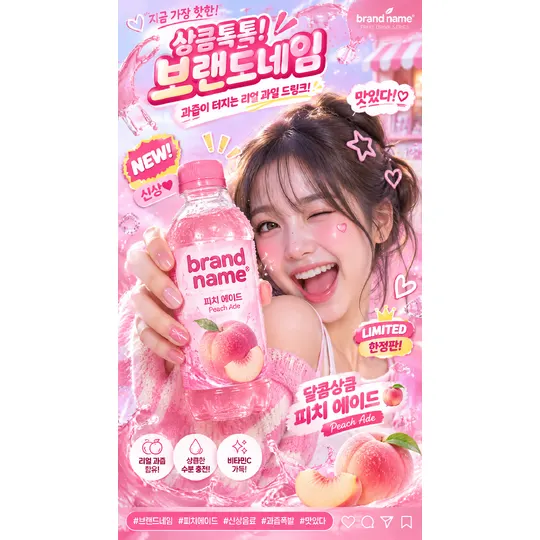
A high-quality, interactive Korean-style poster featuring a
A high-quality, interactive Korean-style poster featuring a cheerful, expressive girl as the main character, hug...
 GPT Image
 Gadgetify
@gadgetify • View creator profile →
2 weeks ago
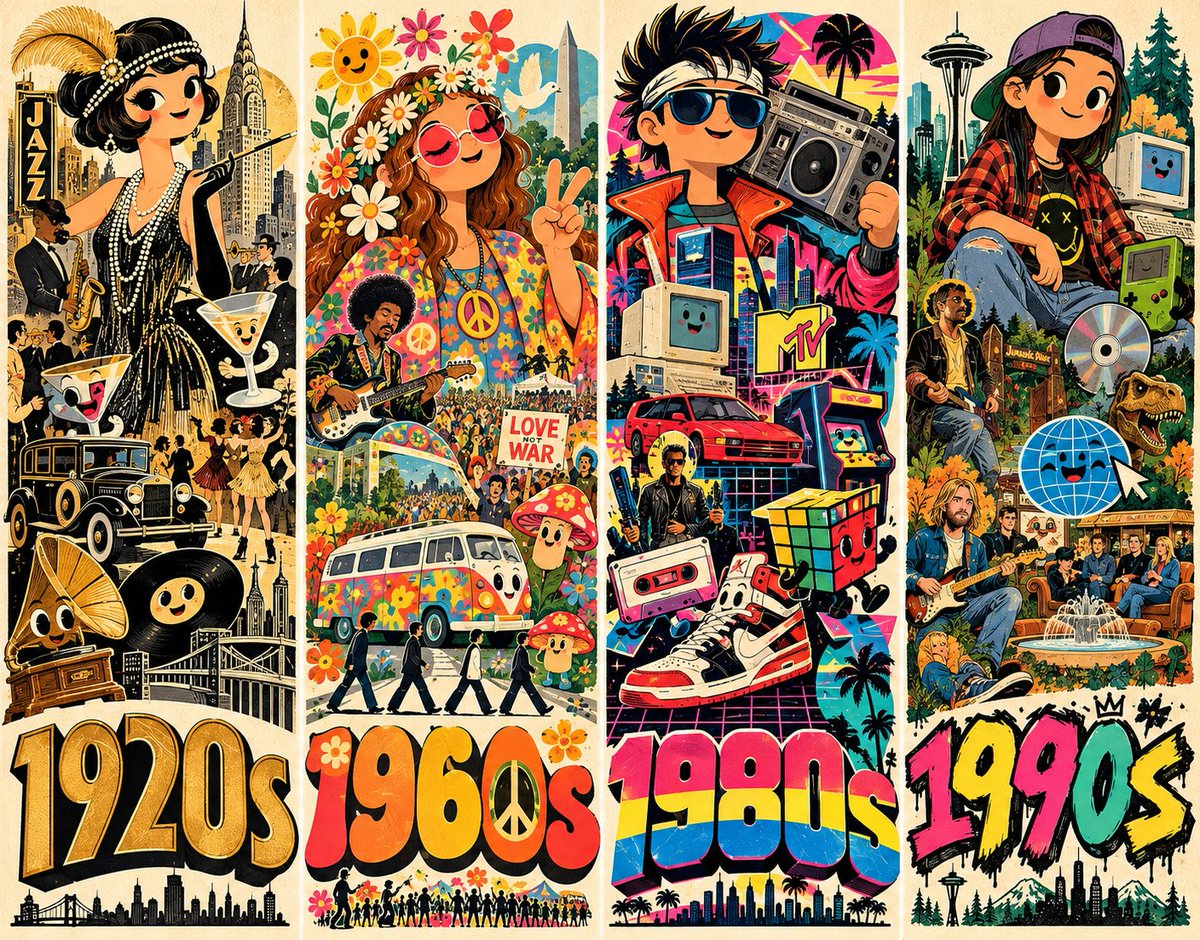
Create ONE finished vertical illustrated poster about 1920s Jazz Age culture, 4:5 portrait, full bleed. Create a playful, dense, symbolic character collage centered on one oversized friendly flapper woman. She has a short black bob, large expressive eyes, rosy cheeks, and a small smile. She wears a black sleeveless fringed dress, long pearl necklaces, black opera gloves, and a jeweled headband with a large golden feather. One gloved hand holds a long cigarette holder. The central character occupies roughly 55–70% of the poster height. Treat her dress and body as a container for the decade: embed miniature jazz musicians, dancers, nightclub scenes, stepped skyscrapers, and geometric Art Deco ornaments across the garment and around her silhouette. Build a dense vertical pyramid composition. Place a golden sun disc and an Art Deco skyscraper skyline behind her head. Add a vertical sign reading "JAZZ" at the upper left. Arrange a saxophonist, trumpet player, pianist, and dancing couples through the middle of the composition. Fill the lower section with a large black vintage automobile, a brass gramophone with a wooden cabinet, black records, cocktail glasses, and a suspension bridge. Give selected props, including the gramophone, one record, and two cocktail glasses, matching friendly eyes and tiny smiles. Do not anthropomorphize every object. Use overlapping scale changes and integrate the imagery into one continuous illustrated collage. Keep the heroine dominant, with small breathing spaces between clusters. Style: playful mid-century children's editorial illustration, contemporary paper-cut collage, retro educational poster, and bold souvenir graphics. Flat shapes, slightly imperfect handmade geometry, simplified rounded anatomy, crisp silhouettes, fine printed-paper grain, soft screenprint texture, and restrained shading. Palette: warm cream, golden ochre, near-black, muted jade, warm peach, and small ivory highlights. Suggest brass and gold with flat printed colors. At the bottom, set the exact title "1920s" in enormous golden-ochre condensed retro block lettering, with a thick black outline and a solid black offset shadow. The title occupies approximately 15–22% of the poster. Place a small black city skyline beneath it. Warm cream paper background with subtle fibers and speckling. One single poster. No grid, no separate panels, no photorealism, no 3D CGI, no glossy plastic, no complex gradients, no extra text beyond "1920s" and "JAZZ", no watermarks. Create ONE finished vertical illustrated poster about 1960s counterculture, flower power, and psychedelic music, 4:5 portrait, full bleed. Create a playful, dense, symbolic character collage centered on one oversized friendly young hippie woman. She has long flowing wavy auburn hair, round rose-colored glasses, a crown of daisies and bright flowers, rosy cheeks, and a relaxed smile. She wears a loose floral garment and a large peace-symbol necklace. One raised hand makes a peace sign. The central character occupies roughly 55–70% of the poster height. Treat her clothing and flowing hair as a container for the decade: densely embed flowers, peace symbols, concert crowds, tiny musicians, green landscapes, and swirling psychedelic patterns. Build a dense vertical pyramid composition. Place a smiling yellow sun, colorful flowers, a white dove, and a pale turquoise city silhouette around the upper section. Integrate a miniature curly-haired electric guitarist in a patterned outfit into the left side of the garment. Across the middle, show an outdoor music festival with a stage and a dense crowd. Add a small protest placard reading "MAKE LOVE NOT WAR". Fill the lower section with a flower-painted vintage camper van, cheerful red-and-cream mushrooms, daisies, and four small walking musician silhouettes crossing a striped road. Give the camper van, sun, and selected mushrooms matching friendly eyes and small smiles. Keep the remaining props unpersonified. Use overlapping scale changes, with scenes flowing across the clothing and beyond its silhouette. The image must feel like one continuous illustrated collage. Style: playful mid-century children's editorial illustration, contemporary paper-cut collage, 1960s educational poster, kawaii object characters, and bold retro souvenir graphics. Flat shapes, rounded forms, handmade geometry, crisp edges, subtle printed-paper grain, soft screenprint texture, and very restrained shading. Palette: warm cream, sunflower yellow, orange, vermillion red, leaf green, turquoise, and warm pink. Use vivid screenprinted colors. At the bottom, set the exact title "1960s" in enormous rounded retro block lettering, alternating orange, yellow, and red, with a thick black outline and solid black offset shadow. Integrate a peace symbol into the counter of the zero while keeping the title readable. The title occupies approximately 15–22% of the poster. Add a narrow band of tiny festival-goer silhouettes and flowers below the title. Warm cream paper background with subtle fibers and speckling. One single poster. No grid, no separate panels, no photorealism, no 3D CGI, no glossy plastic, no heavy shadows, no extra text beyond "1960s" and "MAKE LOVE NOT WAR", no watermarks. Create ONE finished vertical illustrated poster about 1980s pop culture, music, arcade games, and personal technology, 4:5 portrait, full bleed. Create a playful, dense, symbolic character collage centered on one oversized friendly young man. He has exaggerated spiky black hair, a white headband, oversized dark blue sunglasses, rosy cheeks, and a confident smile. He wears a bright red and hot-pink jacket with a dramatically raised collar over a turquoise shirt. He carries a large gray boombox on one shoulder. The central character occupies roughly 55–70% of the poster height. Treat his jacket and torso as a container for the decade: embed a colorful city skyline, geometric graphics, consumer electronics, music imagery, arcade machines, and miniature pop-culture scenes. Build a dense vertical pyramid composition. Behind the head, place a hot-pink sunset disc, turquoise and yellow geometric shapes, and black palm silhouettes. Integrate the boombox into the upper-right silhouette. Across the middle, include a beige desktop computer with a smiling screen, a music television graphic reading "MTV", a bright red sports car, an arcade cabinet, and a small sunglasses-wearing action-film archetype in a black jacket. Fill the lower section with a pink cassette tape, an oversized red-white-and-black high-top sneaker, and a colorful puzzle cube. Give the computer, cassette tape, arcade screen, and puzzle cube matching friendly eyes and small smiles. The puzzle cube may have tiny arms and legs. Use a receding magenta-and-cyan perspective grid as a local collage element behind the lower objects. Keep the outer background warm cream. Use aggressive overlapping scale changes. Objects emerge from the jacket, overlap one another, and extend beyond the body silhouette. Keep the hero clearly dominant. Style: playful mid-century children's editorial illustration combined with paper-cut collage, kawaii object design, and bold retro souvenir graphics. Flat shapes, handmade geometry, thick simplified silhouettes, clean edges, subtle printed-paper grain, soft screenprint texture, and restrained shading. Palette: hot pink, cobalt blue, turquoise, sunny yellow, vermillion red, near-black, and cream. Keep the colors saturated but visibly printed rather than digitally glowing. At the bottom, set the exact title "1980s" in enormous condensed retro block lettering. Divide the letters into broad hot-pink, yellow, and blue horizontal color bands. Add a thick black outline and solid black offset shadow. The title occupies approximately 15–22% of the poster. Place a miniature city skyline and palm silhouettes below the title. One single poster. No grid of separate images, no panels, no photorealism, no 3D CGI, no glossy plastic, no complex gradients, no extra text beyond "1980s" and "MTV", no watermarks. Create ONE finished vertical illustrated poster about 1990s youth culture, grunge music, home computing, and early internet culture, 4:5 portrait, full bleed. Create a playful, dense, symbolic character collage centered on one oversized friendly young woman. She has long dark hair, large expressive eyes, rosy cheeks, and a relaxed smile. She wears a backward purple baseball cap, an open red-and-black plaid flannel shirt, a black T-shirt with a simple yellow face graphic, loose ripped blue jeans, and dark sneakers. Pose her seated casually with one knee raised. The central character occupies roughly 55–70% of the poster height. Treat her clothing, seated pose, and surrounding landscape as a container for the decade. Embed miniature music scenes, computer technology, evergreen trees, city architecture, and familiar entertainment objects around and across her silhouette. Build a dense vertical pyramid composition. Place a Seattle-inspired skyline with the Space Needle and tall evergreen trees behind her head and shoulders. Across the middle, include a beige CRT desktop computer with a friendly smiling screen, a green handheld game console, a large reflective compact disc, and a small dinosaur head emerging from foliage. Fill the lower section with a smiling blue globe crossed by latitude and longitude lines, a large white computer cursor arrow, a miniature long-haired grunge guitarist, an acoustic performance vignette, a skateboard, and a small group of young friends sitting together on an orange cafe sofa. Give the computer screen, handheld console, and globe matching friendly eyes and small smiles. Keep the human figures and dinosaur consistent with the same simplified illustration language. Use overlapping scale changes and integrate all elements into one continuous collage. Allow trees, electronics, and miniature scenes to extend beyond the main character's silhouette. Maintain small breathing spaces between clusters. Style: playful mid-century children's editorial illustration, contemporary paper-cut collage, kawaii object characters, and bold retro souvenir graphics. Flat shapes, slightly imperfect handmade geometry, rounded faces, thick silhouettes, crisp edges, subtle printed-paper grain, soft screenprint texture, and restrained shading. Palette: warm cream, forest green, teal, purple, vermillion red, golden yellow, denim blue, and near-black. At the bottom, set the exact title "1990s" in enormous irregular graffiti-inspired block lettering. Alternate hot pink, yellow, and turquoise, with thick rough black outlines and a solid black offset shadow. Add a few small hand-drawn stars, a crown, and short scribbles around the lettering. The title occupies approximately 15–22% of the poster. Place a narrow city-and-evergreen silhouette below the title. Warm cream paper background with subtle fibers and speckling. Confine the rough marks to the title area. One single poster. No grid, no separate panels, no photorealism, no 3D CGI, no glossy plastic, no complex gradients, no extra text beyond "1990s", no watermarks.
↗
A high-quality, interactive Korean-style poster featuring a cheerful, expressive girl as the main character, hug...
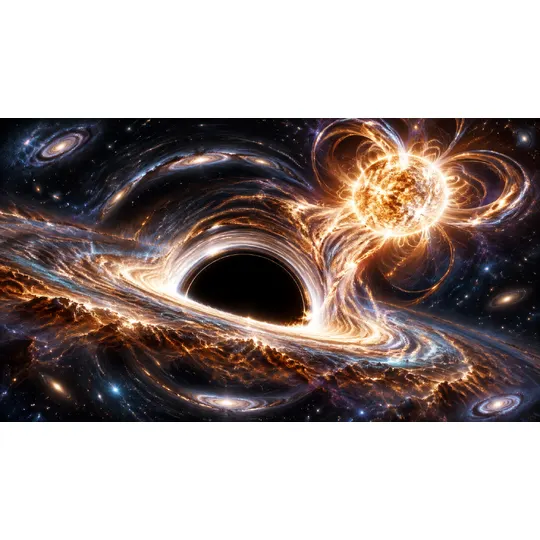 ↗
THE BIRTH OF A GOD — THE FIRST LIGHT OF A FORBIDDEN UNIVERSE Create an absolutely breathtaking, hyper-realistic...
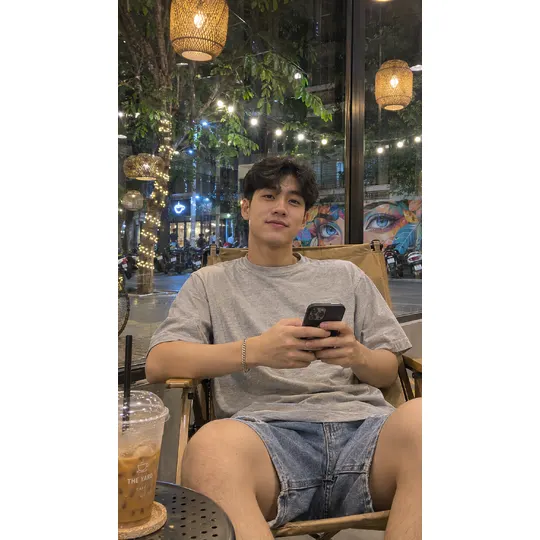 ↗
A casual nighttime café portrait of a young man seated in a tan folding chair, facing the camera with a relaxed...